

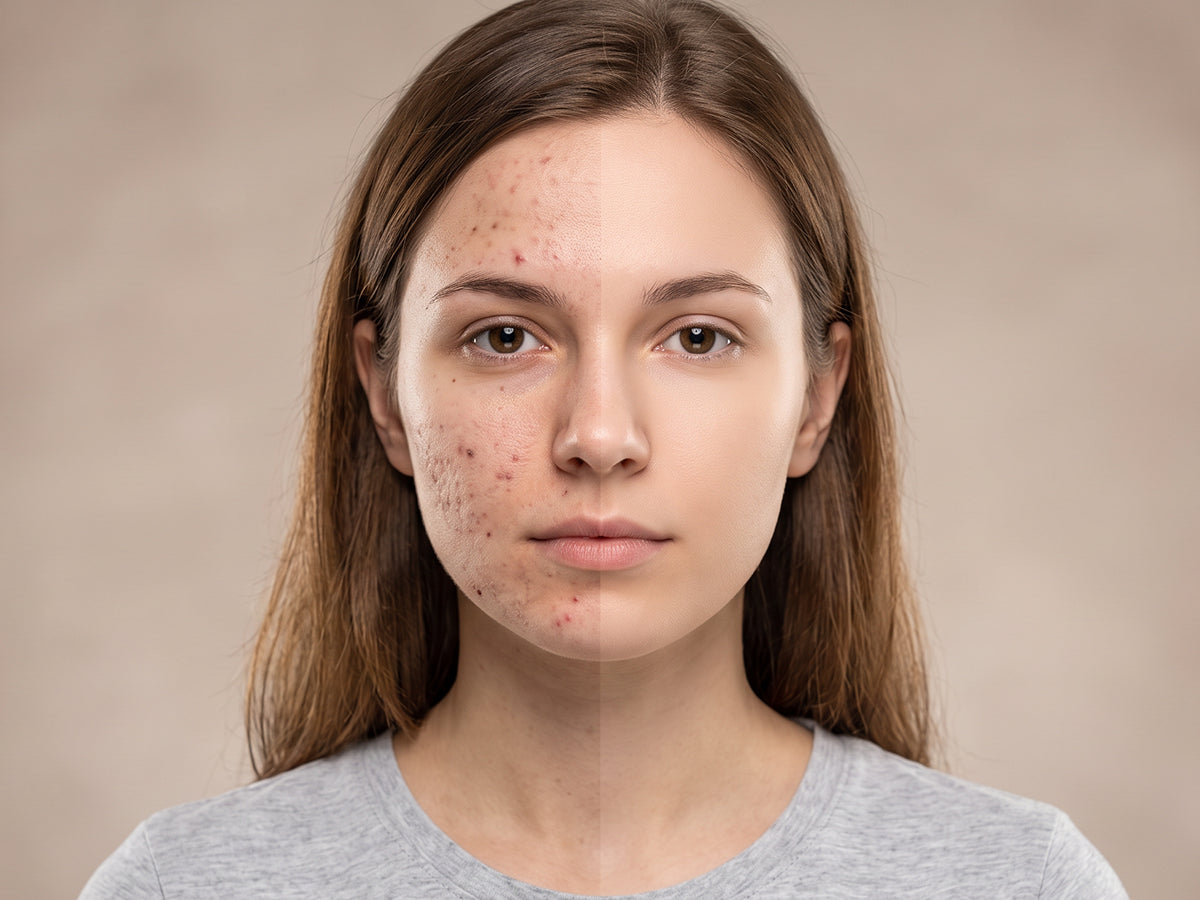
The pimple is gone, but the mark it leaves behind is still visible. You notice it under bathroom lighting, in selfies or whenever you look closely in the mirror. It could be a dark spot, a red patch or a small dent in your skin.
The good news is that acne scars can be lightened, although complete removal isn't always possible. The right approach depends on the type of mark. Flat spots often respond to skincare, while deeper dents and pits usually need professional treatments. Many people benefit from a combination of both.
Let's first understand your scar type and then explore the treatments that can help.
Can Acne Scars Be Removed Completely?
It depends on the type of scar. Flat brown or red marks often fade completely because the underlying skin texture remains intact. With sunscreen and suitable skincare, their appearance can improve over time.
Textured scars are different. They form when the skin loses collagen during healing, leaving behind dents or pits. Treatments can stimulate collagen and soften their appearance, but complete removal is not always possible.
The realistic goal is to make scars less noticeable and improve skin texture. Flat marks can often disappear, while deeper scars can be reduced with the right treatment.
First, Figure Out What Kind of Acne Scar You Have
Before choosing an acne scars treatment, check your skin in natural daylight. Different marks need different approaches.
Flat Marks (Not Really Scars)
These are changes in skin colour rather than texture.
- Post-inflammatory hyperpigmentation (PIH): Brown or dark spots left after acne. They are particularly common on Indian skin tones due to increased melanin production after inflammation.
- Post-inflammatory erythema (PIE): Pink or red marks caused by changes in small blood vessels after a breakout.
Quick test: If the skin feels smooth when you run your finger over it, you're likely dealing with a flat mark.
Textured Scars (True Acne Scars)
These develop when collagen production is affected during healing.
-
Ice pick scars: Narrow, deep holes.
-
Boxcar scars: Wider depressions with defined edges, often seen on cheeks and temples.
-
Rolling scars: Uneven, wavy dents caused by fibrous bands beneath the skin.
Raised Scars
Hypertrophic scars and keloids appear as raised, firm areas, commonly around the jawline, chest and back. They need dermatologist-led treatment rather than regular skincare products.
You can have more than one scar type at the same time, so treatment may need to address each separately.
How to Remove Acne Scars: Treatments That Actually Work
The right treatment depends on what you see. Here are four home-care fixes for flat marks and six professional options for deeper scars.
For Dark and Red Marks: 4 Fixes You Can Start at Home
Fix 1: Sunscreen
Sun exposure can make dark marks more noticeable and slow down fading. Use a broad-spectrum SPF 30 or higher every morning and reapply when outdoors. Choose a lightweight formula you'll enjoy wearing daily.
Explore the sunscreen collection and Sun Expertise range.
Fix 2: Vitamin C
Vitamin C helps brighten uneven skin tone and provides antioxidant protection. Apply it in the morning before moisturiser and sunscreen. Lightweight serums or emulsions are good options for oily and combination skin.
Explore the Energizing Emulsion and Power C+ collection.
Fix 3: Retinol or Retinal
Retinoids support skin renewal and collagen production, helping improve pigmentation and superficial texture over time. Start with twice-weekly application at night and increase gradually if tolerated. Avoid retinoids during pregnancy.
Learn about retinol serum benefits, retinal vs retinol and the Power Retinol collection.
Fix 4: Gentle Chemical Exfoliation (AHA or BHA)
AHAs such as glycolic acid help exfoliate the skin's surface, while BHA, particularly salicylic acid, is useful for oily and acne-prone skin. Start once a week and increase only if your skin tolerates it.
Explore the Resurfacing Peel Cleansing Gel and Derma Peel Pro range.
Important: Avoid using retinoids and exfoliating acids on the same night when starting out. Irritation can trigger further pigmentation, especially on medium to deep skin tones.
Flat marks may show improvement within 8 to 12 weeks, although older pigmentation can take longer.
For Pits, Dents and Rough Texture: 6 In-Clinic Treatments
Creams cannot fill deep scars. A dermatologist may recommend one of these treatments depending on the scar type.
- Chemical Peels: Professional-strength acids exfoliate the skin, helping improve superficial scars, uneven texture and pigmentation. A series of three to six sessions may be recommended.
- Microneedling: Fine needles create controlled micro-injuries that stimulate collagen production. It is commonly used for rolling and shallow boxcar scars. Multiple sessions are usually needed.
- Fractional Laser: This treatment stimulates collagen to improve deeper texture and uneven scars. Medium to deep Indian skin tones need careful treatment settings to reduce pigmentation risks.
- Subcision: A dermatologist releases the fibrous bands pulling rolling scars downwards, allowing the depressed skin to lift.
- TCA CROSS: A targeted acid treatment used mainly for deep ice pick scars. It stimulates collagen formation inside individual scar depressions.
- Dermal Fillers: Fillers add volume beneath depressed scars, making them less noticeable. Results are temporary and depend on the filler used.
Raised or keloid scars need a separate approach, which may include steroid injections or silicone sheets under dermatological guidance.
What to Use for Acne Scars: A Simple Routine
A simple routine is often enough to begin treating flat marks.
Morning Routine
- Gentle gel or foam cleanser.
- Vitamin C serum or emulsion.
- Lightweight moisturiser.
- Broad-spectrum sunscreen.
Night Routine
- Cleansing milk or emulsion to remove sunscreen and makeup.
- Gentle face cleanser.
- Retinol on selected nights or exfoliating acid on alternate nights.
- Moisturiser.
Still breaking out? Treat active acne first to prevent new marks. Explore the Clearist range, non-comedogenic skincare and combos and kits.
Mistakes That Make Acne Scars Worse
Avoid these common habits while treating acne marks:
- Picking pimples: Increases inflammation and scarring risk.
- Skipping sunscreen: Makes pigmentation darker and more persistent.
- Scrubbing hard: Irritates the skin and can worsen marks.
- Switching products too often: Give suitable skincare 8 to 12 weeks to show improvement.
- Trying strong peels during active breakouts: Consult a dermatologist before starting professional procedures.
When Should You See a Dermatologist?
Consider professional advice if:
- You have pitted, dented or raised scars.
- Marks show little improvement after three months of consistent skincare.
- You experience painful or cystic acne.
- You have medium to deep skin and are considering lasers or strong peels.
- Before agreeing to a treatment package, ask the dermatologist to identify your scar type and explain the expected results, sessions and possible side effects.
The Bottom Line
Understanding your acne scar type is the first step towards choosing the right treatment. Flat marks often respond to sunscreen and consistent skincare, while deeper scars may need professional procedures.
Give your skin time and focus on gradual improvement rather than chasing perfectly smooth skin.
Explore the Skeyndor range or visit the Know Your Treatment page to learn more.
Frequently Asked Questions
1. How do you get rid of acne scars on the face fast?
Flat marks may improve with sunscreen, vitamin C and retinoids. Deeper scars need professional treatments. There is no reliable overnight solution.
2. Can acne scars be removed permanently?
Flat marks can sometimes disappear completely. Deeper scars can improve with treatment but may not disappear entirely.
3. What is the best thing to use for acne scars at home?
Sunscreen, vitamin C and retinoids can help improve flat acne marks. Introduce active ingredients gradually.
4. How long does it take for acne scars to fade?
Flat marks may take a few months. Textured scars generally need longer and may require multiple clinic sessions.
5. Is microneedling good for acne scars on Indian skin?
It can help improve rolling and shallow boxcar scars. A dermatologist experienced with Indian skin tones should determine the right settings and treatment plan.
6. Do acne scars go away on their own?
Flat red and brown marks often fade naturally. Deeper scars are less likely to disappear without professional treatment.
Share:
How to Remove Makeup Properly: 7 Easy Steps?